

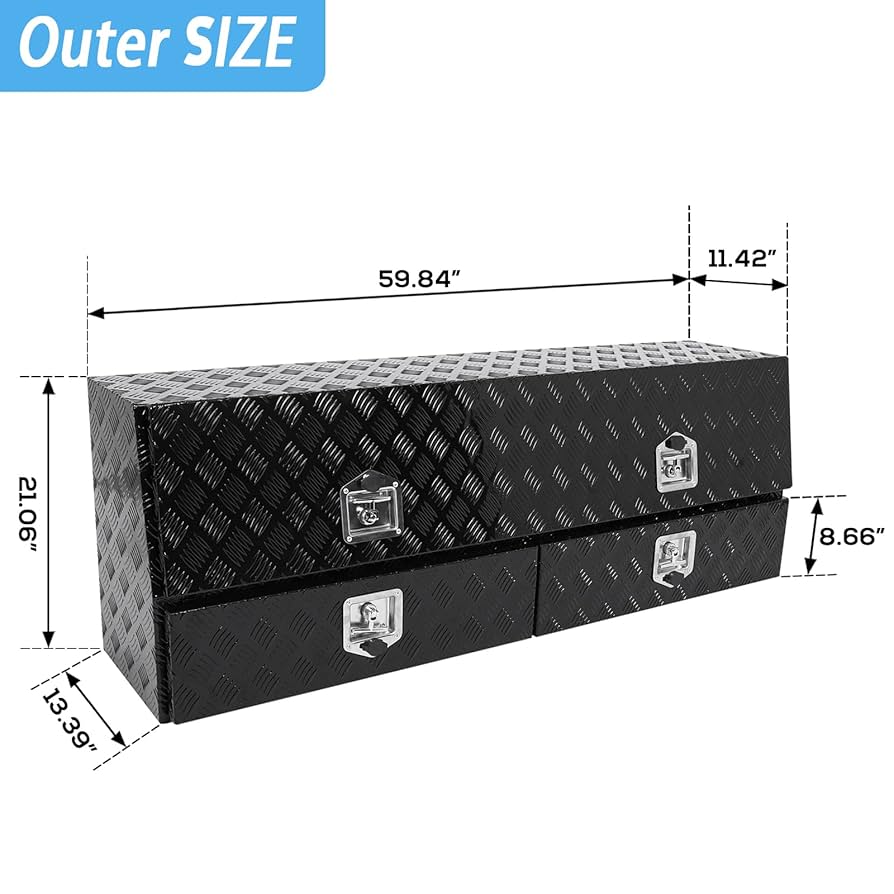
If you’re looking to buy a truck tool box, knowing how they are measured is key to finding the perfect fit for your truck. Getting the size right means your tools stay safe and organized, without wasting space or causing problems on the road.
But how exactly do you measure a truck tool box? It’s simpler than you might think, and once you understand the basics, you’ll shop smarter and avoid costly mistakes. Keep reading to discover the easy steps to measure your truck tool box like a pro.

Credit: www.garvee.com
Types Of Truck Tool Boxes
Truck tool boxes come in different shapes and sizes. They help keep your tools safe and organized. Choosing the right type depends on your truck and what you need to carry.
Here are the main types of truck tool boxes. Each type fits specific truck areas and storage needs.
Crossbed Tool Boxes
Crossbed tool boxes sit across the bed of the truck, just behind the cab. They are wide and offer a lot of storage space. Many people use them to store large tools or equipment.
Saddle Tool Boxes
Saddle tool boxes hang on the sides of the truck bed. They look like saddlebags on a horse. These boxes are good for storing smaller tools and keep the truck bed floor free.
- Mounted on each side of the truck bed
- Do not take up floor space
- Easy to access tools from the side
- Usually weatherproof
Chest Tool Boxes
Chest tool boxes are long and narrow. They fit along one side of the truck bed. These boxes are good for organizing hand tools and small parts.
Under-body Tool Boxes
Under-body tool boxes attach under the truck bed. They keep tools hidden and save bed space. They are perfect for people who want a clean truck bed look.
| Type | Location | Best For |
| Crossbed | Across truck bed behind cab | Large tools and equipment |
| Saddle | Sides of truck bed | Small tools, saving floor space |
| Chest | Along one side of truck bed | Hand tools and small parts |
| Under-Body | Under truck bed | Hidden storage, clean look |
Key Dimensions To Measure
Measuring your truck tool box correctly is important to find the right fit. Knowing the key dimensions helps avoid buying a box that is too big or too small.
Focus on four main measurements: length, width, height, and opening size. These details ensure your tool box fits your truck and meets your storage needs.
Length
Length is the distance from one end of the tool box to the other. Measure along the longest side of the box. This dimension usually runs parallel to the truck bed.
Make sure to measure the outside edges to get the full length size.
Width
Width is the distance across the tool box from side to side. Measure from the left edge to the right edge of the box. This size affects how the box fits between the wheel wells.
- Measure the widest part of the box.
- Consider any handles or side attachments.
- Check the truck bed width for clearance.
Height
Height is the distance from the bottom to the top of the tool box. Measure from the base that sits on the truck bed to the highest point.
| Height Type | Measurement Tip |
| Base Height | From truck bed to box bottom |
| Total Height | From truck bed to the top edge |
| Handle Height | Include handles if they add height |
Opening Size
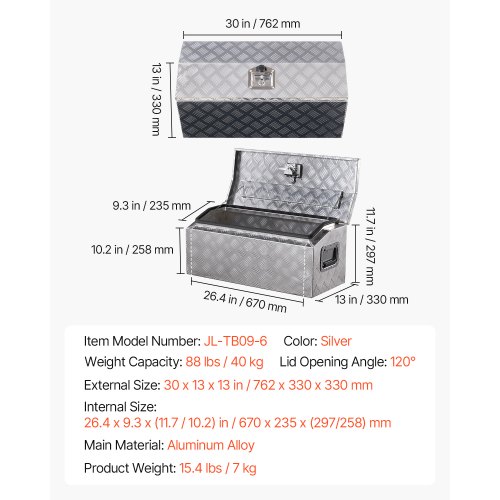
Opening size is the space available when the tool box lid or door is open. This affects how easily you can access your tools.
Check these points for opening size:
- Measure the width of the opening.
- Measure the height of the opening.
- Consider the angle the lid opens to.
- Look for any obstructions near the opening.
Measuring Your Truck Bed
Before buying a truck tool box, you need to measure your truck bed. Accurate measurements help you find the right size box. This guide explains how to measure the bed length, width, and wheel wells.
Taking the right measurements ensures your tool box fits well and works properly. Use a tape measure and write down each number.
Bed Length
Measure the length of your truck bed from the inside of the bulkhead to the inside of the tailgate. This is the usable space for your tool box.
Keep the tailgate closed while measuring to get the correct length. Measure in inches for better accuracy.
Bed Width
Measure the width between the inside walls of the truck bed. This is the space where your tool box will sit.
Measure at the widest point near the top of the bed. The width may be narrower near the bottom due to the truck’s shape.
Wheel Well Considerations
Truck beds have wheel wells that stick up inside the bed. These affect how much flat space you have for a tool box.
Measure the width between the wheel wells and the distance from the tailgate to the wheel wells. This helps choose a tool box that fits without blocking the wheel wells.
- Measure inside the wheel wells for height and width
- Check if the tool box will sit on or between the wheel wells
- Consider smaller boxes for beds with large wheel wells
Choosing The Right Tool Box Size
Choosing the right size for your truck tool box is important. It helps keep your tools safe and your truck organized. The right size also fits well in your truck bed.
To pick the best tool box size, think about your truck bed, cargo space, and how much weight the box can hold.
Matching Tool Box To Bed Size
Measure your truck bed’s width, length, and height first. Your tool box should fit without blocking the tailgate or side rails. A box too big or small can cause problems.
- Measure the width inside the bed rails
- Check the length from the cab to the tailgate
- Consider the height under your truck bed cover
- Leave space for easy tailgate opening
Accounting For Cargo Space
Your tool box should not take up all the cargo space. You need room for other gear or materials. Think about how you use your truck daily.
| Truck Bed Length | Tool Box Length | Remaining Cargo Space |
| 6 feet | 4 feet | 2 feet |
| 8 feet | 6 feet | 2 feet |
| 5 feet | 3 feet | 2 feet |
Weight Capacity Limits
Check the weight limit of your truck bed and tool box. Overloading can damage your truck or cause safety problems. Always know the max weight your box can hold.
- Look at the tool box weight rating
- Know your truck bed’s weight capacity
- Factor in the weight of tools and equipment
- Do not exceed the lower of the two weight limits
Tools Needed For Accurate Measurement
Measuring a truck tool box correctly ensures it fits your truck bed perfectly. Using the right tools helps you get precise dimensions.
Three common tools help with accurate measurement: a measuring tape, a straight edge, and a level. Each tool serves a different purpose in the process.
Measuring Tape
A measuring tape is essential for taking length, width, and height measurements of your truck tool box. It gives you flexibility and accuracy.
- Choose a tape with both inches and centimeters.
- Use a metal tape for durability.
- Pull the tape taut to avoid slack.
- Measure from edge to edge carefully.
Straight Edge
A straight edge helps check if surfaces are flat or if corners are square. It ensures the tool box base or lid does not warp.
| Use | Why It Matters |
| Check flatness of truck bed | Prevents gaps under the tool box |
| Verify square corners | Ensures proper fitting and alignment |
| Measure straight lines | Aids in precise dimension recording |
Level
A level is important to confirm the truck bed and tool box sit evenly. It helps avoid uneven pressure points and damage.
To use a level:
- Place it on the truck bed surface.
- Check the bubble to see if it is centered.
- Repeat on different sides for accuracy.
- Adjust the tool box position as needed.
Credit: www.vevor.com
Common Measurement Mistakes To Avoid
Measuring truck tool boxes can be tricky. Incorrect measurements lead to poor fitting. Understanding common mistakes helps you avoid errors.
Accurate measurements ensure the tool box fits well. Avoid these common mistakes for a better fit.
Ignoring Bed Obstructions
Bed obstructions affect tool box fitting. Many people forget to account for wheel wells and other obstacles.
Measure the space between obstructions. This ensures the tool box fits without issues.
- Check for wheel wells
- Look for bed liners
- Note any added accessories
Overlooking Door Clearance
Door clearance is important for tool box access. Ignoring this can lead to frustration.
Make sure the tool box doors can open fully. Check clearance with the tailgate down.
- Measure door opening space
- Test with tailgate up and down
- Ensure easy access
Misreading Dimensions
Misreading dimensions is a common error. Always double-check measurements to avoid mistakes.
Use a reliable tape measure. Record dimensions carefully to ensure accuracy.
- Double-check your measurements
- Use clear units (inches or centimeters)
- Keep a record for future reference
Installation Tips For Perfect Fit
Installing a truck tool box might seem simple but requires careful measurement. Ensuring a proper fit involves several steps.
Let’s explore how to position, secure, and check the accessibility of your tool box for a seamless installation.
Positioning The Tool Box
Find the best spot in the truck bed for your tool box. This ensures it won’t shift during transit.
- Measure the width of the truck bed
- Check for any obstructions
- Align the box with the cab to avoid wind resistance
Securing Mounts
Secure mounts keep the tool box in place. Properly installed mounts prevent unwanted movement.
| Mount Type | Installation Tip |
| J-Bolt | Tighten bolts evenly |
| Clamp Mount | Use rubber spacers for grip |
| Drill Mount | Seal holes to prevent rust |
Checking Accessibility
Check that you can easily reach into your tool box. Accessibility is key for efficient use.

Credit: www.youtube.com
Custom Vs. Standard Tool Boxes
Truck tool boxes come in different sizes to fit various needs. Choosing the right size helps keep tools safe and organized.
There are two main types of tool boxes: custom and standard. Knowing how they are measured helps pick the best one for your truck.
Benefits Of Custom Sizing
Custom tool boxes fit your truck perfectly. They use the exact space you have available.
Custom sizes let you store tools in the best way. You can add compartments or shapes that work for you.
- Maximizes storage space
- Fits unique truck shapes
- Allows special compartments
- Improves tool organization
When Standard Sizes Work
Standard tool boxes come in common sizes. They fit most trucks and are easy to find.
These sizes are good if you want a quick solution. They also work if your storage needs are simple.
- Fits most truck beds
- Easy to install
- Good for general tool storage
- Widely available
Cost Considerations
Custom tool boxes usually cost more. They need special work to fit your truck exactly.
Standard tool boxes are less expensive. They are made in large quantities and ready to buy.
- Custom sizing raises price
- Standard sizes save money
- Custom boxes may need longer wait
- Standard boxes are often in stock
Frequently Asked Questions
How Do You Measure A Truck Tool Box?
Measure the length, width, and height of the tool box. Use a tape measure for accuracy. Record all dimensions in inches for proper fit.
What Is The Most Important Dimension For Truck Tool Boxes?
Length is the key measurement. It determines if the tool box fits across the truck bed. Check your truck’s width before buying.
Should I Measure Inside Or Outside Dimensions?
Always measure outside dimensions. This ensures the tool box fits in your truck bed without issues. Inside size affects storage capacity.
How Do I Measure A Truck Bed For A Tool Box?
Measure the width between the wheel wells and the overall bed width. Also, consider bed length and height for a perfect fit.
Conclusion
Measuring a truck tool box is simple once you know what to check. Focus on length, width, and height for the best fit. Always measure the space where you plan to place the box. This helps avoid buying the wrong size.
Remember, correct measurements keep your tools safe and organized. Take your time and measure twice. This small step saves headaches later. Now, you can choose the right truck tool box with confidence.