

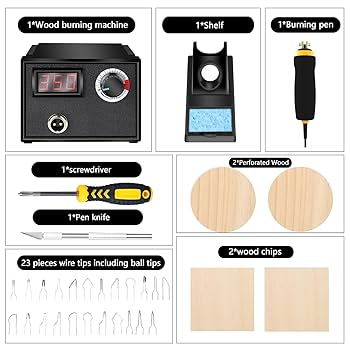
Have you ever wondered just how hot a wood burning tool gets? If you’re planning to try wood burning art or need one for your craft projects, knowing the temperature is crucial.
The heat affects how your design turns out and, more importantly, how safe you are while using the tool. You’ll discover exactly how hot these tools can get and why that matters for your work. Keep reading to unlock the key to mastering your wood burning projects safely and effectively.
Heat Range Of Wood Burning Tools
Wood burning tools get very hot to burn designs into wood. The heat helps create clear and deep marks.
Knowing the heat range is important to use the tool safely and get good results.
Typical Temperature Spectrum
Wood burning tools usually reach temperatures between 400°F and 900°F. This range allows different effects on wood.
Lower heat makes light marks. Higher heat creates dark, deep burns.
- 400°F to 600°F: Light shading and fine lines
- 600°F to 800°F: Medium dark burns with good detail
- 800°F to 900°F: Deep, dark burns but risk of charring
Factors Influencing Heat Levels
Several things affect how hot a wood burning tool gets. These factors help control the heat for different projects.
Temperature depends on power, tip type, and how long the tool is on.
- Power Source:Electric tools heat faster and reach steady temperatures.
- Tip Shape and Size:Small tips heat quickly and create fine lines. Large tips hold more heat for bigger burns.
- Time On:The longer the tool is on, the hotter it becomes.
- Material:Some tips conduct heat better, affecting temperature.

Credit: lsirish.com
Types Of Wood Burning Tools
Wood burning tools come in different types. Each type gets hot in a unique way to help burn wood safely and clearly.
Understanding the types helps you choose the right tool for your project and control the heat better.
Basic Pen Style Burners
Basic pen style burners heat up quickly and reach temperatures around 400 to 700 degrees Fahrenheit. They are easy to hold and good for small projects.
These tools have a fixed temperature. They work well for simple designs but may not suit detailed wood burning.
Adjustable Temperature Units
Adjustable temperature units let you change the heat from about 200 to 900 degrees Fahrenheit. This helps when working on different wood types.
You can lower the heat to avoid burning soft wood or raise it for deep, dark lines on hard wood.
- Low heat for light shading
- Medium heat for clear lines
- High heat for dark, deep burns
Professional Grade Tools
Professional grade tools reach very high temperatures, sometimes over 1000 degrees Fahrenheit. They offer precise control and fast heating.
These tools are best for artists and experts who need detailed work and strong burns on tough wood.
| Feature | Basic Pen Style | Adjustable Units | Professional Grade |
|---|---|---|---|
| Temperature Range | 400-700 °F | 200-900 °F | Up to 1000+ °F |
| Control | Fixed | Adjustable | Precise |
| Best For | Simple projects | Various woods | Expert artists |
Material Impact On Heat Settings
Wood burning tools need different heat levels for different materials. Adjusting the temperature helps create better results.
Knowing how wood type and tool tips affect heat makes your work easier and safer.
Wood Varieties And Heat Needs
Different woods burn at different temperatures. Softwoods need less heat than hardwoods to burn well.
- Pine and cedar require lower heat settings to avoid burning too fast.
- Oak and maple need medium heat for clear, even marks.
- Hardwoods like walnut and cherry call for higher heat to burn deeply.
- Softwoods are easier to burn but can scorch if too hot.
Effect Of Tool Tips On Temperature
Different tips change how heat spreads. Fine tips need less heat for detail work.
| Tip Type | Recommended Heat Setting | Purpose |
| Fine Point | Low to Medium | Detail and line work |
| Flat Tip | Medium | Shading large areas |
| Calligraphy Tip | Medium to High | Bold strokes and curves |
| Wide Tip | High | Covering large surfaces |
Measuring Tool Temperature
Wood burning tools get very hot to burn designs into wood. Knowing the tool’s temperature helps you work safely and get better results.
Measuring the heat of a wood burning tool can be done in different ways. Some methods are simple and others need special tools.
Common Measurement Methods
One way to check the temperature is by feeling the heat carefully. This is not very safe or accurate. Some people watch the color of the metal tip to guess the heat. Red or orange colors show high heat.
- Touching the tool is risky and not exact
- Color changes on the tip give a rough idea
- Using special tools gives better results
Using Infrared Thermometers
Infrared thermometers measure temperature without touching the tool. They use light to read heat from the surface. This method is quick and safe.
To use an infrared thermometer, point it at the tool’s tip. Press the button to see the temperature on the screen. This helps avoid burns and gives exact numbers.
- Non-contact measurement
- Fast and accurate readings
- Reduces risk of burns
- Easy to use for any tool size
Safety Tips For Handling Heat
Wood burning tools reach very high temperatures. Care is needed to prevent injuries. Knowing how to handle heat safely can keep you protected.
This guide shares important safety tips for using wood burning tools. Follow these tips to avoid burns and accidents.
Protective Gear Essentials
Wear the right gear to protect your skin and eyes from heat and sparks. Protective gear helps reduce injury risk.
- Heat-resistant gloves protect your hands from burns.
- Safety goggles shield your eyes from smoke and flying debris.
- Long-sleeve shirts and pants made of thick fabric guard your arms and legs.
- Closed-toe shoes prevent burns to your feet.
- Use a heat-resistant apron to protect your body.
Avoiding Burns And Accidents
Handle your wood burning tool carefully to avoid burns. Always keep your workspace clear and organized.
| Safety Tip | Reason |
| Keep a fire extinguisher nearby | Quickly put out accidental fires |
| Never leave the tool unattended | Prevents unintended burns or fire |
| Allow tool to cool before storage | Avoid burns and damage |
| Work in a well-ventilated area | Reduce smoke inhalation |
| Use clamps to hold wood steady | Prevent slips and accidental contact |

Credit: lsirish.com
Optimizing Heat For Best Results
A wood burning tool helps create intricate designs on wood. Getting the right heat is key to making your work look great.
Different projects may need different heat settings. Learning to control the temperature can improve your results.
Adjusting Temperature For Detail Work
Detail work requires careful temperature adjustment. Too much heat can burn the wood, while too little might not leave a mark.
- Start with a lower heat setting
- Increase heat gradually as needed
- Test on scrap wood before starting
Maintaining Consistent Heat
Keeping a steady temperature helps make even lines and designs. Fluctuating heat can lead to uneven burns.
| Heat Setting | Result |
| Low | Light shading |
| Medium | Medium burn |
| High | Dark burn |

Credit: www.amazon.com
Frequently Asked Questions
How Hot Does A Wood Burning Tool Get?
A wood burning tool typically reaches temperatures between 650°F and 950°F. This range allows it to effectively burn and etch designs on wood surfaces with precision.
What Affects The Heat Of A Wood Burning Tool?
The heat depends on the tool’s wattage, tip type, and temperature control settings. Higher wattage tools heat faster and maintain stable temperatures for better results.
Can A Wood Burning Tool Cause Burns?
Yes, wood burning tools can cause serious burns due to high temperatures. Always handle with care and use protective gloves when necessary.
How Long Does It Take For A Wood Burning Tool To Heat?
Most wood burning tools heat up within 1 to 5 minutes. The exact time varies based on the tool’s power and temperature settings.
Conclusion
Wood burning tools get very hot, often reaching 600 to 900 degrees Fahrenheit. This heat helps create clear, lasting designs on wood surfaces. Always handle the tool carefully to avoid burns or damage. Using the right temperature makes your work easier and better.
Remember, practice helps you control the heat and improve your art. Stay safe and enjoy creating with your wood burning tool.