


Have you ever struggled to create perfect holes or shapes in your projects? The punch tool might be exactly what you need.
Knowing how to use this simple yet powerful tool can save you time and effort while giving your work a professional finish. You’ll discover easy steps to master the punch tool, whether you’re working with leather, metal, or paper. By the end, you’ll feel confident handling your punch tool like a pro—and ready to take your craft to the next level.
Keep reading to unlock these handy tips!
Punch Tool Basics
The punch tool is a simple hand tool used to create holes or shapes in materials. It works by pressing or hitting the tool to cut or mark the surface.
People use punch tools in many crafts and trades. Knowing the basics helps you use it safely and effectively.
Types Of Punch Tools
Punch tools come in different types. Each type serves a unique purpose depending on the material and hole shape needed.
- Center Punch:Marks the center of a point for drilling.
- Hole Punch:Creates round holes in soft materials like leather or paper.
- Pin Punch:Removes pins or bolts from holes.
- Prick Punch:Makes small marks for layout or alignment.
Key Components
A punch tool has a few main parts. Each part helps the tool work well and last long.
- Tip:The sharp end that makes the hole or mark.
- Body:The long part you hold or hit.
- Handle:The part for gripping the tool comfortably.
- Head:The top end that gets struck with a hammer.
Common Uses
Punch tools are useful in many tasks. They help create holes or marks quickly and accurately.
- Marking drill points on metal or wood
- Making holes in leather for belts or crafts
- Removing pins from mechanical parts
- Creating holes in paper or fabric for crafts

Credit: business.walmart.com
Choosing The Right Punch Tool
Choosing the right punch tool is important for efficient work. The tool must fit the material and task.
This guide helps you pick a punch tool based on key factors. These include material type, size, and quality.
Material Compatibility
Different punch tools work best with specific materials. Steel, leather, and plastic need different tips and strength.
Check the tool’s description to see which materials it supports. Using the wrong tool can damage both the punch and the material.
Size And Shape Selection
- Measure the hole size you need before choosing a punch.
- Pick a punch shape that fits your project, such as round or square.
- Use smaller punches for delicate work and larger ones for thick materials.
- Keep a set of different sizes for flexibility in various tasks.
Choosing the right size and shape improves accuracy and reduces damage to the material.
Quality And Durability
| Feature | Why It Matters |
|---|---|
| Material | Strong steel punches last longer and cut cleaner holes. |
| Handle Grip | A good grip reduces hand fatigue and improves control. |
| Build Quality | Well-made tools resist bending and dulling over time. |
Choose punch tools made from high-quality materials. Look for firm grips and solid construction.
Preparing For Precision Cutting
Using a punch tool correctly starts with careful preparation. This helps you cut materials with accuracy and safety.
Before you begin cutting, follow some key steps to set up your workspace and materials well.
Safety Measures
Safety is the top priority when using a punch tool. Wear protective gear to prevent injuries.
- Put on safety goggles to protect your eyes.
- Wear gloves to keep your hands safe.
- Use ear protection if the tool is loud.
- Keep your fingers clear of the cutting area.
- Work in a well-lit space to see clearly.
Workspace Setup
Organize your workspace for the best results. A tidy area helps you work faster and avoid mistakes.
| Tip | Reason |
| Clear the table | Prevents accidents and gives room to work |
| Use a cutting mat | Protects your surface and tool |
| Arrange good lighting | Improves visibility for precise cuts |
| Keep tools close | Saves time and keeps you focused |
Material Preparation
Prepare your material to get clean and exact cuts. Know your material’s thickness and type.
Check the material before cutting:
- Measure thickness to select the right punch size.
- Mark the cutting line clearly with a pencil.
- Secure the material so it does not move.
Credit: www.vevor.ca
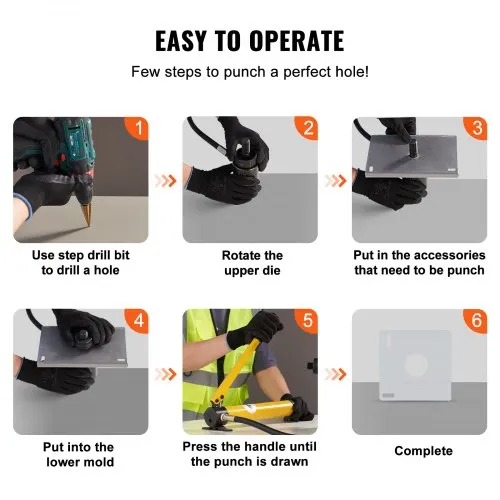
Step-by-step Punch Tool Operation
The punch tool helps make clean holes in various materials. Using it correctly ensures neat and safe results.
Follow these steps carefully to use the punch tool with ease and accuracy.
Marking The Cut Area
Start by clearly marking where you want the hole. Use a pencil or marker for accuracy.
Double-check the mark to make sure it is in the right spot before punching.
Aligning The Tool
Place the punch tool tip exactly on the marked spot. Keep the tool steady and straight.
Proper alignment helps the punch cut cleanly and prevents damage to the material.
Applying Correct Pressure
Press the punch tool firmly but not too hard. Use steady pressure to cut through the material.
If you press too lightly, the hole may be incomplete. Too hard can damage the tool or material.
- Use moderate force
- Keep pressure even
- Stop if you feel resistance
Releasing And Inspecting
Release the pressure gently and remove the punch tool. Check the hole to see if it is clean.
If the hole is rough or incomplete, try punching again or use a smaller tool for accuracy.
Advanced Techniques
Using a punch tool goes beyond simple holes. You can create complex designs with skill.
Advanced techniques help you save time and improve accuracy in your projects.
Multiple Punching Patterns
You can make different shapes by changing punching patterns. This adds style to your work.
Try spacing punches evenly or create clusters for texture and visual interest.
- Use a ruler to keep holes straight
- Mix small and large punches for variety
- Create borders with repeated patterns
- Form shapes like stars or flowers using dots
Using Punch Tools With Jigs
Jigs hold your material steady and guide the punch tool. This helps make exact holes.
Jigs improve repeatability and reduce mistakes during punching.
- Set the jig to desired hole spacing
- Clamp material securely in the jig
- Use the punch tool along the jig guides
- Check alignment often for accuracy
Combining Punching With Other Tools
Use punch tools with other hand tools for detailed effects. This makes your work unique.
Combine punching with cutting, embossing, or stamping for creative designs.
- Cut shapes first, then punch holes inside
- Emboss around punched areas for depth
- Stamp patterns near punched holes
- Use punches to add vent holes after cutting

Credit: www.amazon.ca
Troubleshooting Common Issues
Using a punch tool can sometimes lead to problems. It’s important to know how to fix these issues.
Here are some common problems and how to solve them. This will help you get the best results from your punch tool.
Misaligned Cuts
Misaligned cuts can ruin your project. It is crucial to check the alignment before punching.
Tool Jamming
Tool jamming can stop your work. Keep your punch tool clean to avoid jams.
- Regularly clean the tool after use
- Lubricate moving parts with machine oil
- Check for any worn-out parts and replace them
Material Damage
Material damage is often caused by improper use. Ensure the punch tool is suitable for the material.
| Material Type | Recommended Tool |
| Leather | Round punch |
| Metal | Metal punch |
| Plastic | Plastic punch |
Maintaining Your Punch Tool
Taking care of your punch tool helps it last longer. Regular maintenance keeps it in top condition.
Follow these steps to clean, sharpen, and store your punch tool properly. These tips will ensure efficient performance every time you use it.
Cleaning Tips
Cleaning your punch tool removes dirt and debris. This keeps it working smoothly.
- Use a soft brush to remove dust.
- Wipe with a damp cloth for sticky residues.
- Dry it completely before storing.
Sharpening Blades
Sharp blades make cleaner cuts. Regular sharpening is important for efficiency.
Use a sharpening stone or a professional service. Always follow safety guidelines.
Storage Recommendations
Proper storage prevents damage. Keep your punch tool in a safe place.
- Store in a dry location to prevent rust.
- Use a protective cover for the blades.
- Avoid stacking heavy items on top of it.
Project Ideas For Practice
Using a punch tool can help you create many fun and useful projects. It is a handy tool for making holes or shapes in different materials.
Try practicing with simple projects to get comfortable with the punch tool. This will improve your skills and give you ideas for more complex work.
Diy Leather Goods
You can use a punch tool to make holes in leather for belts, wallets, or bracelets. It helps with stitching and adding decorative patterns.
Try punching evenly spaced holes to make a leather keychain or a simple belt. You can also create shapes like stars or circles for decoration.
- Punch holes for lacing on wallets
- Make holes for belt buckles
- Create patterns on leather bracelets
- Design custom leather bookmarks
Custom Metalwork
Punch tools work well on thin metal sheets. You can make holes for screws or create decorative designs on metal.
Practice by punching holes in small metal tags or making shapes for jewelry pieces. This helps you control the tool on hard materials.
- Make holes for metal keychains
- Create patterns on metal pendants
- Design metal tags with shapes
- Punch holes for metal bookmarks
Crafting Decorative Paper
Punch tools are great for paper crafts. Use them to make holes for binding or to add shapes to cards and scrapbooks.
Try making confetti shapes or decorative edges on paper. This is an easy way to add detail to your paper projects.
- Create holes for handmade cards
- Punch shapes for scrapbooking
- Make confetti from colored paper
- Decorate edges of paper invitations
Frequently Asked Questions
What Is A Punch Tool Used For?
A punch tool creates holes or indentations in materials like metal, leather, or paper. It helps in precise hole making and shaping tasks.
How Do You Safely Use A Punch Tool?
Wear safety goggles and gloves. Secure the material firmly. Use a hammer gently to strike the punch tool for controlled holes.
Can Punch Tools Be Used On All Materials?
Punch tools work best on soft to medium-hard materials like leather, plastic, and thin metals. Harder materials may damage the tool.
How Do I Choose The Right Punch Tool Size?
Select a punch tool size based on the hole diameter needed. Match the tool size to your project requirements for accuracy.
Conclusion
Using the punch tool can make your projects easier and faster. Practice helps you get better with each use. Always keep safety in mind while working. Start with simple shapes, then try more complex ones. The punch tool offers many creative possibilities.
Keep experimenting to see what you can create. This tool is helpful for both beginners and experts. Enjoy the process and have fun crafting your designs.