

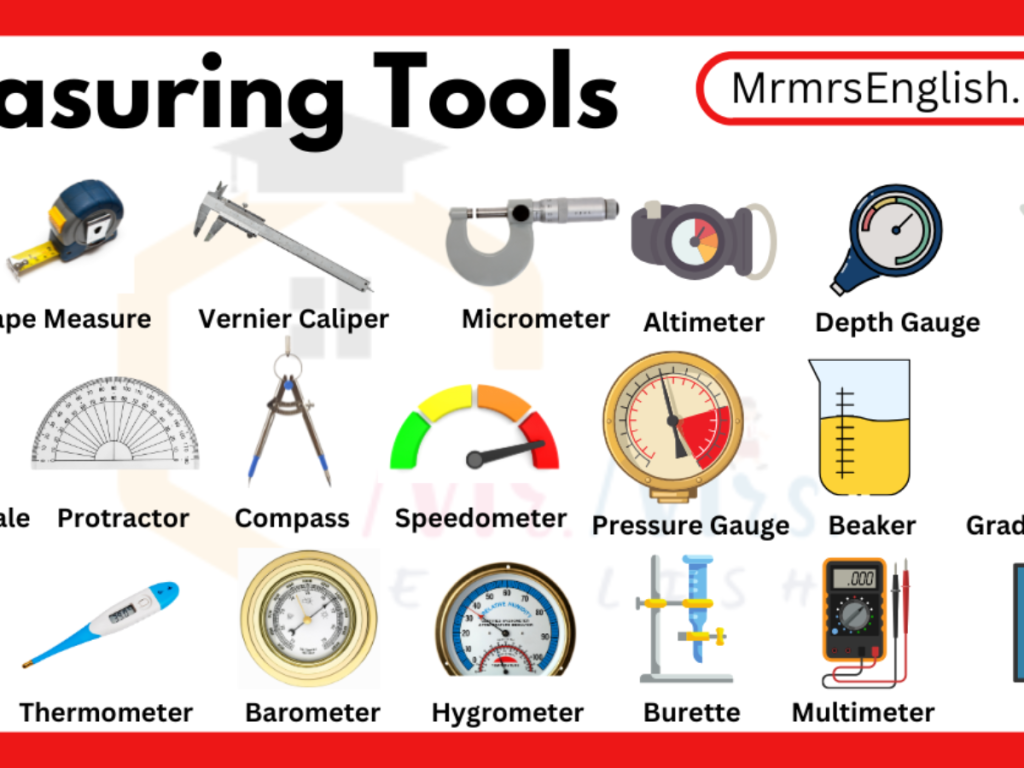
Have you ever wondered how people measure the length of objects accurately? Whether you’re working on a DIY project, sewing, or just curious, knowing the right tool to measure length is essential.
Choosing the correct measuring tool can save you time and help you get precise results every time. You’ll discover the most common tools used to measure length, how they work, and which one is best for your needs. Keep reading, and you’ll never second-guess your measurements again!
Common Length Measuring Tools
Measuring length is important in many tasks. Different tools help us measure length accurately.
Each tool has its own use. Some tools measure small objects, while others measure large distances.
Rulers are simple tools used to measure short lengths. They are usually made of wood, plastic, or metal.
Measuring tapes are flexible and can measure longer lengths. They are used in construction and sewing.
- Rulers measure up to 30 centimeters or 12 inches.
- Measuring tapes can measure several meters or feet.
- Both have marked units like centimeters and inches.
Calipers measure the distance between two opposite sides of an object. They are good for small objects.
Micrometers measure very small lengths with high accuracy. They are used in mechanical work.
- Calipers can measure inside, outside, and depth dimensions.
- Micrometers measure thickness or diameter in millimeters or inches.
- Both tools have a scale or digital display for reading measurements.
Laser distance meters use a laser beam to measure long distances quickly. They are very accurate.
These tools are often used in construction and real estate to measure rooms and buildings.
- They can measure distances up to hundreds of meters.
- Laser meters show results on a digital screen.
- They save time compared to traditional measuring tapes.

Credit: www.creeklinehouse.com
Rulers And Measuring Tapes
Measuring length is an important task in many jobs and hobbies. Two common tools used are rulers and measuring tapes. They help us find the exact size of objects or spaces.
Both tools have different uses and shapes. This guide explains the types of rulers, flexible measuring tapes, and their materials.
Types Of Rulers
Rulers come in many types. Some are short, while others can be very long. They usually have measurements in inches and centimeters.
Common types include wooden, plastic, and metal rulers. Some rulers have clear markings for accuracy. Others have special edges for drawing straight lines.
- Standard 12-inch ruler for school and office use
- Meter stick for longer measurements
- Folding rulers that fold for easy carrying
- Clear plastic rulers for seeing beneath the ruler
Flexible Measuring Tapes
Flexible measuring tapes are long and bendable. They are good for measuring curved or round objects. Tailors and builders often use them.
Measuring tapes can roll up into a small case. This makes them easy to carry. They usually show inches and centimeters on both sides.
- Soft tapes made of fabric or plastic
- Steel tapes for strong and durable use
- Retractable tapes that snap back into a case
Material And Durability
Rulers and tapes are made from different materials. Wood, plastic, and metal are common for rulers. Each has strengths and weaknesses.
Measuring tapes often use metal or flexible plastic. Metal tapes last long but can rust. Plastic tapes do not rust but may tear.
| Tool | Material | Durability |
|---|---|---|
| Wooden ruler | Wood | Good, but can warp or break |
| Plastic ruler | Plastic | Light and flexible, can crack |
| Metal ruler | Steel or aluminum | Strong and long-lasting |
| Fabric measuring tape | Cloth or plastic | Flexible but can wear out |
| Steel measuring tape | Steel | Very durable, resists damage |
Calipers And Micrometers
Measuring length accurately is essential in many fields. Tools like calipers and micrometers help measure small distances and thicknesses with precision.
Both tools are common in workshops, labs, and industries. They offer different features and suit various measuring tasks.
Vernier Calipers
Vernier calipers are precise tools used to measure internal and external dimensions. They have a main scale and a sliding vernier scale.
- Measure outside dimensions with the large jaws
- Measure inside dimensions with the small jaws
- Measure depths with the depth probe
- Read measurements by comparing the vernier scale to the main scale
Dial Calipers
Dial calipers are similar to vernier calipers but use a dial for easy reading. The dial shows the measurement in finer detail.
| Feature | Vernier Calipers | Dial Calipers |
| Reading Type | Vernier scale | Dial gauge |
| Ease of Use | Requires skill | Easy to read |
| Common Use | Precision measurement | Quick measurement |
| Cost | Lower | Higher |
Micrometer Screw Gauges
Micrometer screw gauges measure very small distances, thicknesses, or diameters. They use a calibrated screw for precise measurement.
- Has a spindle that moves when the thimble turns
- Measures with high accuracy, often to 0.01 mm
- Commonly used for small parts and metal sheets
- Read the scale on the sleeve and thimble to get the size
Laser Distance Meters
Laser distance meters are tools used to measure length quickly and accurately. They use laser light to find the distance between two points.
These devices are popular in construction, real estate, and many other fields where precise measurements matter.
How They Work
Laser distance meters send a laser beam to a target. The device then measures the time it takes for the laser to bounce back.
This time helps calculate the exact distance between the meter and the target point.
- The device emits a laser pulse
- The pulse hits the target and reflects
- The meter calculates the distance using light speed and time
Accuracy And Range
Laser distance meters are very accurate. Most can measure distances within a few millimeters.
The range varies. Some meters work up to 100 feet, while others reach 1,000 feet or more.
- Short-range meters: up to 100 feet
- Medium-range meters: 100 to 300 feet
- Long-range meters: over 300 feet
- Accuracy usually within ±1 to 2 millimeters
Applications
Laser distance meters are useful in many tasks. They help measure rooms, buildings, and land.
They are also used in DIY projects, interior design, and real estate to get quick and precise length measurements.
- Measuring room sizes and wall lengths
- Checking distances on construction sites
- Planning furniture layout and interior designs
- Surveying land and outdoor areas
- Estimating materials needed for projects
Specialized Length Measuring Tools
Measuring length accurately is important in many fields. Some tools are made for special jobs. They help measure distances and sizes that normal rulers cannot.
This article explains three specialized tools. They are measuring wheels, odometers, and gauge blocks. Each tool has a unique use.
Measuring Wheels
Measuring wheels are used to measure long distances. They have a wheel that rolls over the ground. Each turn of the wheel measures a set length.
- Easy to use on rough ground
- Good for outdoor measurements
- Used in construction and landscaping
- Can measure roads, fields, or large areas
Odometers
An odometer measures distance traveled by a vehicle or object. It counts wheel rotations and converts them to length units.
| Type | Use | Common Field |
| Mechanical Odometer | Counts wheel turns | Cars, bikes |
| Digital Odometer | Uses sensors for accuracy | Vehicles, robots |
| Portable Odometer | Handheld for walking distance | Surveying, hiking |
Gauge Blocks
Gauge blocks are precise metal or ceramic blocks. They create exact lengths by stacking them together. They help calibrate other measuring tools.
| Material | Length Range | Use |
|---|---|---|
| Steel | 1 mm to 100 mm | Precision engineering |
| Ceramic | 1 mm to 50 mm | Wear resistant measurements |
| Tungsten Carbide | 1 mm to 100 mm | High durability |
Choosing The Right Tool
Measuring length accurately is important for many tasks. The right tool makes it easier. Different tools work better for different jobs.
Consider what you need to measure. This will help you pick the right tool. Let’s explore some factors to consider.
Measurement Precision
Some jobs need very precise measurements. Tools like calipers and micrometers are good for this. They measure small distances accurately.
Rulers and tape measures are less precise. They work well for everyday tasks. Choose the right tool based on how exact you need to be.
- Calipers: High precision for small objects
- Micrometers: Excellent for exact measurements
- Rulers: Good for basic tasks
- Tape measures: Useful for larger areas
Surface And Object Type
The type of surface or object affects tool choice. Flexible tape measures work well on curved surfaces. Rigid rulers are better for flat objects.
Consider the material too. Laser measures are great for long distances. They also work well on solid surfaces.
- Flexible tape: Best for curves
- Rigid ruler: Perfect for flat surfaces
- Laser measure: Ideal for long, solid surfaces
Ease Of Use And Portability
Some tools are easier to carry and use. Tape measures are portable and fit in a pocket. Lasers are lightweight and easy to handle.
Think about where you will use the tool. This helps in choosing the most convenient option.
- Tape measure: Easy to carry, good for quick tasks
- Laser measure: Lightweight, great for professional use
- Ruler: Simple, reliable for basic needs
Maintaining Measuring Instruments
Proper care of measuring tools keeps them accurate and reliable. Regular maintenance is key to ensuring they work well.
Learn how to maintain your tools with calibration, storage, and handling tips. These steps help prolong the life of your measuring instruments.
Calibration Techniques
Calibration ensures your measuring tools provide precise readings. Regular checks are necessary to maintain accuracy.
- Use a standard reference to check measurements.
- Adjust tools according to the manual.
- Document the calibration results for future reference.
Storage Tips
Store measuring instruments properly to prevent damage. Safe storage extends the tool’s lifespan.
| Tool Type | Storage Environment |
| Ruler | Flat, dry place |
| Tape Measure | Cool, dust-free area |
| Caliper | In a protective case |
Handling Precautions
Handle tools with care to keep them in good condition. Careful handling prevents wear and tear.
- Clean tools after use to remove dirt.
- Avoid dropping or hitting them against hard surfaces.
- Use the tool for its intended purpose only.
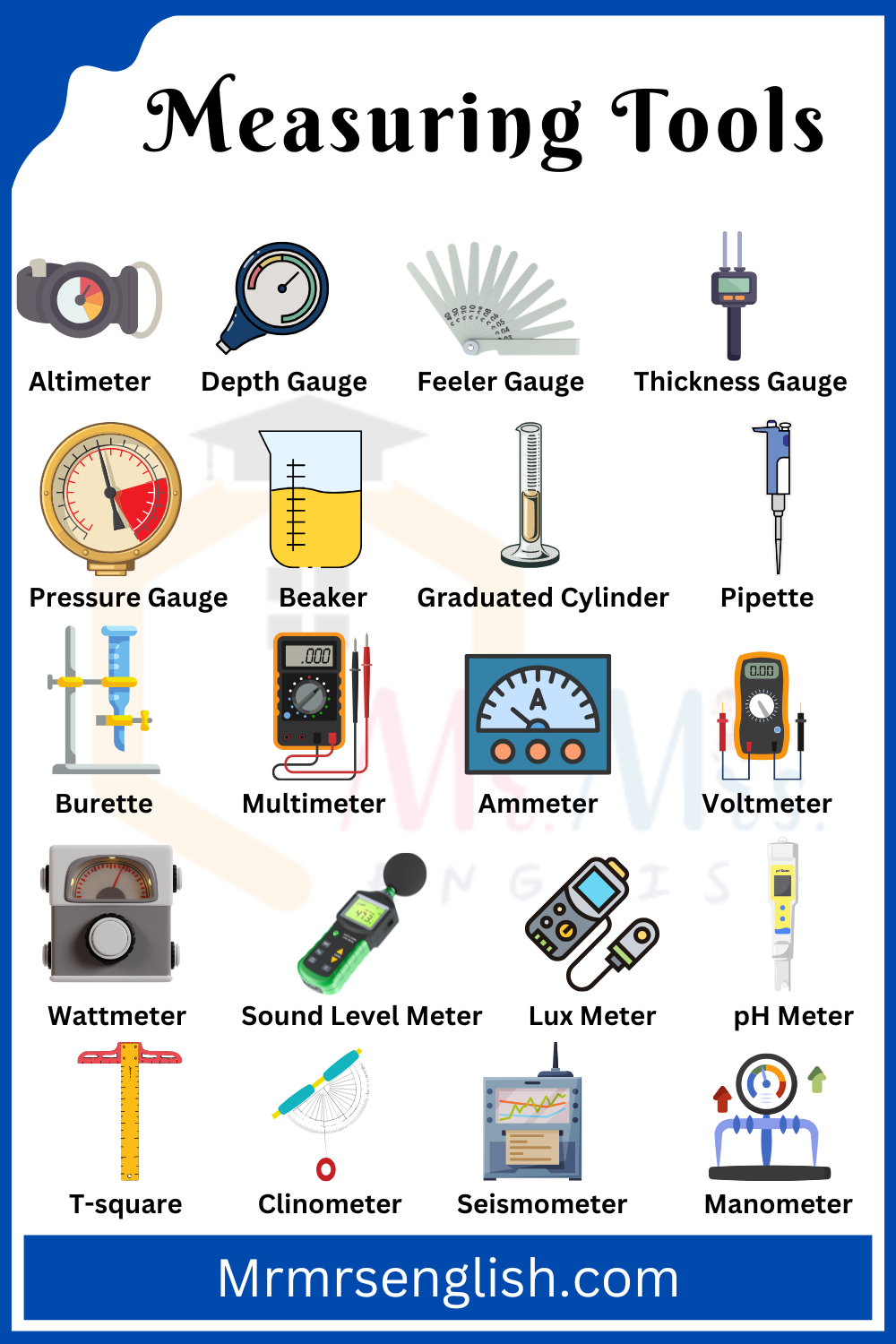
Credit: mrmrsenglish.com

Credit: www.shutterstock.com
Frequently Asked Questions
What Tool Is Commonly Used To Measure Length?
A ruler is the most common tool for measuring length. It provides measurements in centimeters or inches. Rulers are simple, accurate, and widely used in schools and offices. They work well for small objects and straight lines.
How Do Measuring Tapes Measure Length Accurately?
Measuring tapes are flexible tools used for longer objects. They feature marked units in inches and centimeters. The tape extends to measure curves or irregular shapes. They are portable and ideal for construction, sewing, or home projects.
What Device Measures Length In Scientific Settings?
Calipers are precise instruments used in labs and engineering. They measure internal and external dimensions with high accuracy. Digital calipers display measurements on a screen for easy reading. They are essential for detailed and small-scale length measurements.
Can Laser Tools Measure Length Effectively?
Yes, laser distance meters measure length using laser beams. They are fast and accurate over long distances. These tools work well indoors and outdoors. Laser meters are popular in construction, real estate, and surveying jobs.
Conclusion
Measuring length needs the right tool for accurate results. Rulers, tape measures, and calipers serve different purposes. Each tool fits specific tasks and materials. Choose the tool that matches your measuring needs. Using the correct tool saves time and avoids mistakes.
Remember, simple tools often work best for everyday measuring. Keep your tools clean and store them properly. This keeps measurements reliable for a long time. Measuring length becomes easy with the right tool in hand.